
You install a shiny new privacy-first analytics tool, let it run for a week next to Google Analytics, and then you compare. Google says you had 10,000 visitors. The new tool says 7,400. Your stomach drops. Did you break something? Did you just lose a quarter of your audience overnight?
No. You lost nothing. You're just seeing what happens when two tools count the same reality with different rulers. Neither number is a lie, exactly — but they're measuring different things, and once you understand how, you'll stop trusting the bigger number by default. Let's walk through why they diverge.
Reason 1: Ad blockers quietly delete Google's data
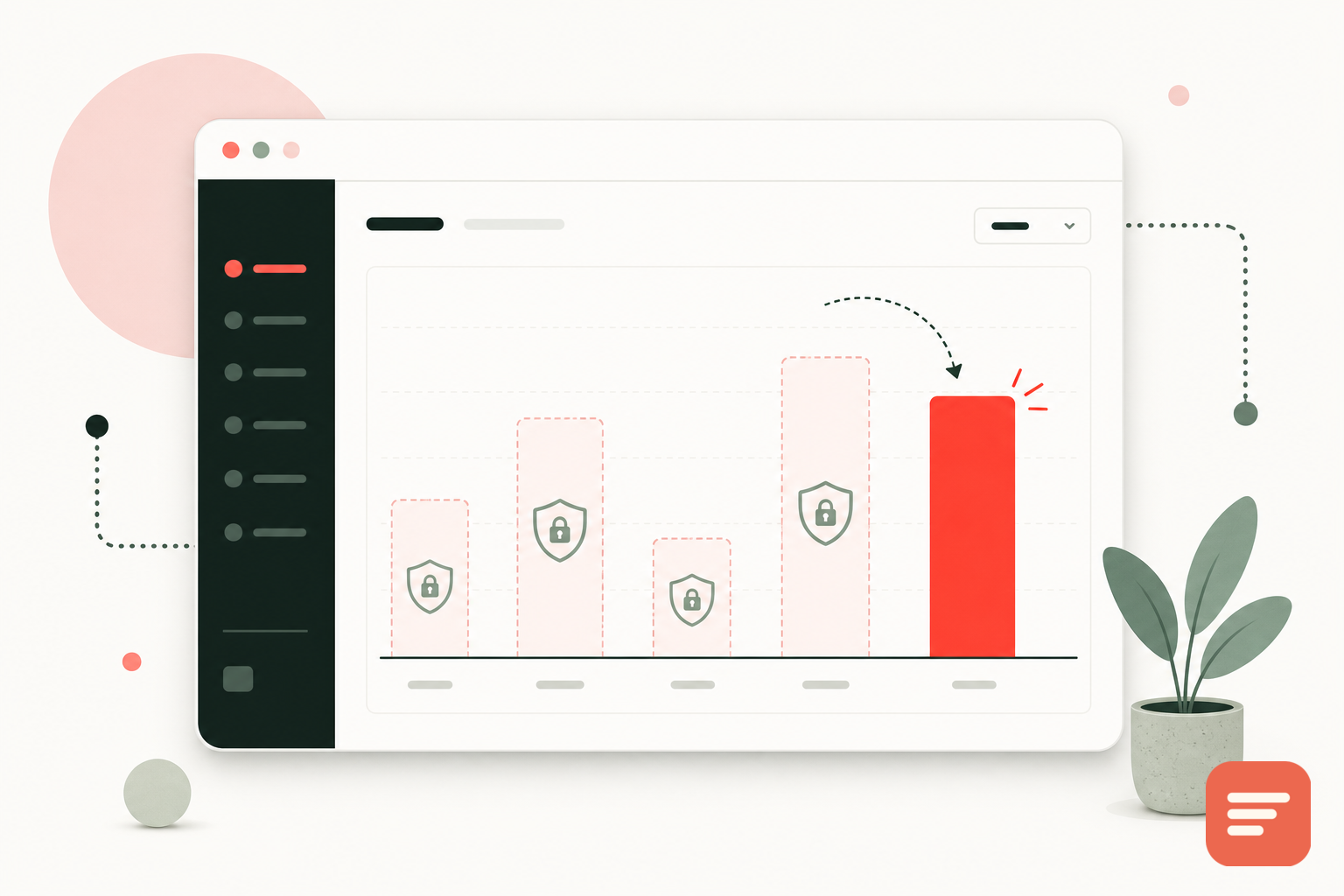
A meaningful chunk of the web now runs an ad blocker, a privacy-focused browser, or a network-level filter. Nearly all of them block Google Analytics on sight — its script is one of the most recognized trackers on the internet, and blocklists target it specifically.
When a visitor with a blocker lands on your page, Google Analytics never sees them. They read your article, maybe buy something, and vanish from your GA report entirely. On a technical or privacy-conscious audience, that blind spot can be large.
Privacy-first tools tend to fare better here. Because they don't set cookies, don't build profiles, and often aren't on the aggressive blocklists that flag ad-tech, more of those blocked-by-GA visitors actually get counted. So part of that "missing" 2,600 people? They were never missing. Google just couldn't see them, and now you can.
Reason 2: Consent banners eat your traffic
Here's an irony worth sitting with. To use Google Analytics compliantly in many regions, you're supposed to ask for consent before it loads. Which means every visitor who ignores the banner, clicks "reject," or closes it without choosing is a visitor GA never records.
People are banner-blind. They dismiss those pop-ups on reflex. Each reflexive dismissal is a real human on your site who doesn't appear in your consent-gated GA numbers. On some sites this alone accounts for a huge slice of the gap.
A cookieless tool sidesteps the whole thing. With no cookies and no personal data to consent to, there's often no banner to gate the measurement — so those visitors get counted instead of quietly disappearing behind a pop-up they never engaged with.
Reason 3: Bots inflate the picture — in both directions
The web is crawling with automated traffic: search crawlers, uptime monitors, scrapers, AI bots, and outright junk. How a tool handles them changes your totals a lot, and this one can cut either way.
- Sometimes GA shows more because low-quality or misconfigured tracking lets bot and spam traffic slip into reports, padding your numbers with visitors who were never people.
- Sometimes GA shows less because a privacy tool with weaker bot filtering counts crawlers a stricter tool would have thrown out.
The takeaway isn't "one tool is always higher." It's that aggressive, transparent bot filtering matters more than the raw total. A tool that clearly screens out known bots gives you a number that reflects humans, which is the only number that should influence a decision.
Reason 4: They literally count differently
Even in a fantasy world with no blockers, no banners, and no bots, the numbers still wouldn't match — because the definitions underneath them aren't the same.
What counts as a "visitor"?
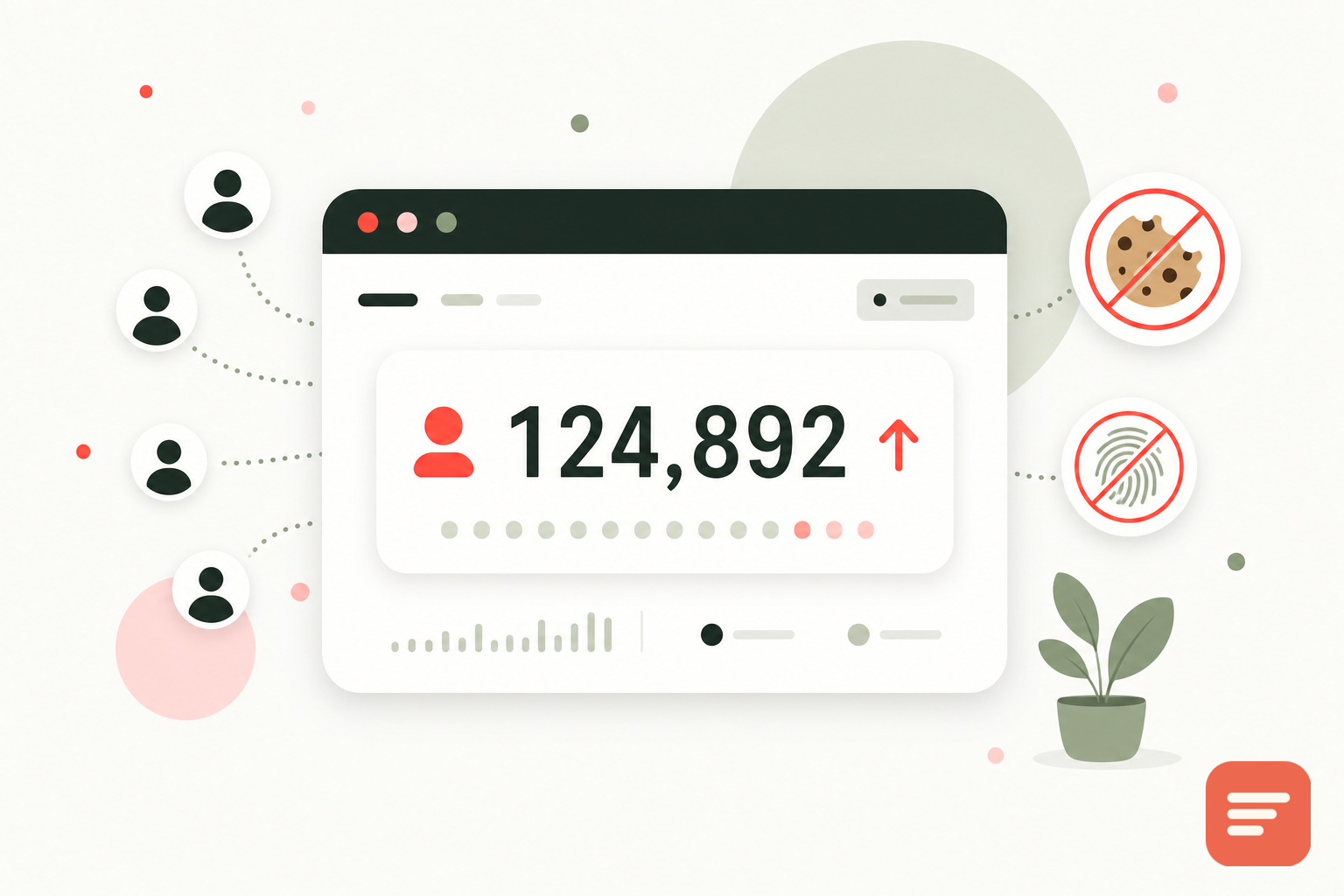
Cookie-based tools like GA identify returning visitors with persistent identifiers, trying to recognize the same person across days and devices. Cookieless tools estimate unique visitors using privacy-preserving methods that intentionally don't track people across sessions. Same word, "visitor," two different definitions. Of course the totals differ.
What counts as a "session"?
Session timeout rules, how a visit that spans midnight is handled, whether a new campaign source starts a fresh session — these are arbitrary product decisions, and every tool makes them slightly differently. Two honest tools watching the identical behavior will report different session counts purely because they drew the boundaries in different places.
What even fires a pageview?
Single-page apps, prerendering, and back-button navigations all get handled differently depending on the tool. One might log a pageview where another doesn't. It adds up.
Comparing GA's "users" to a privacy tool's "visitors" is like comparing miles to kilometers and being upset the numbers aren't equal. They're measuring the same journey with a different unit.
So which one is closer to reality?
Here's the honest answer: no analytics tool reports absolute truth. Every one of them is an estimate built on assumptions. Anyone who tells you their count is exact is selling something.
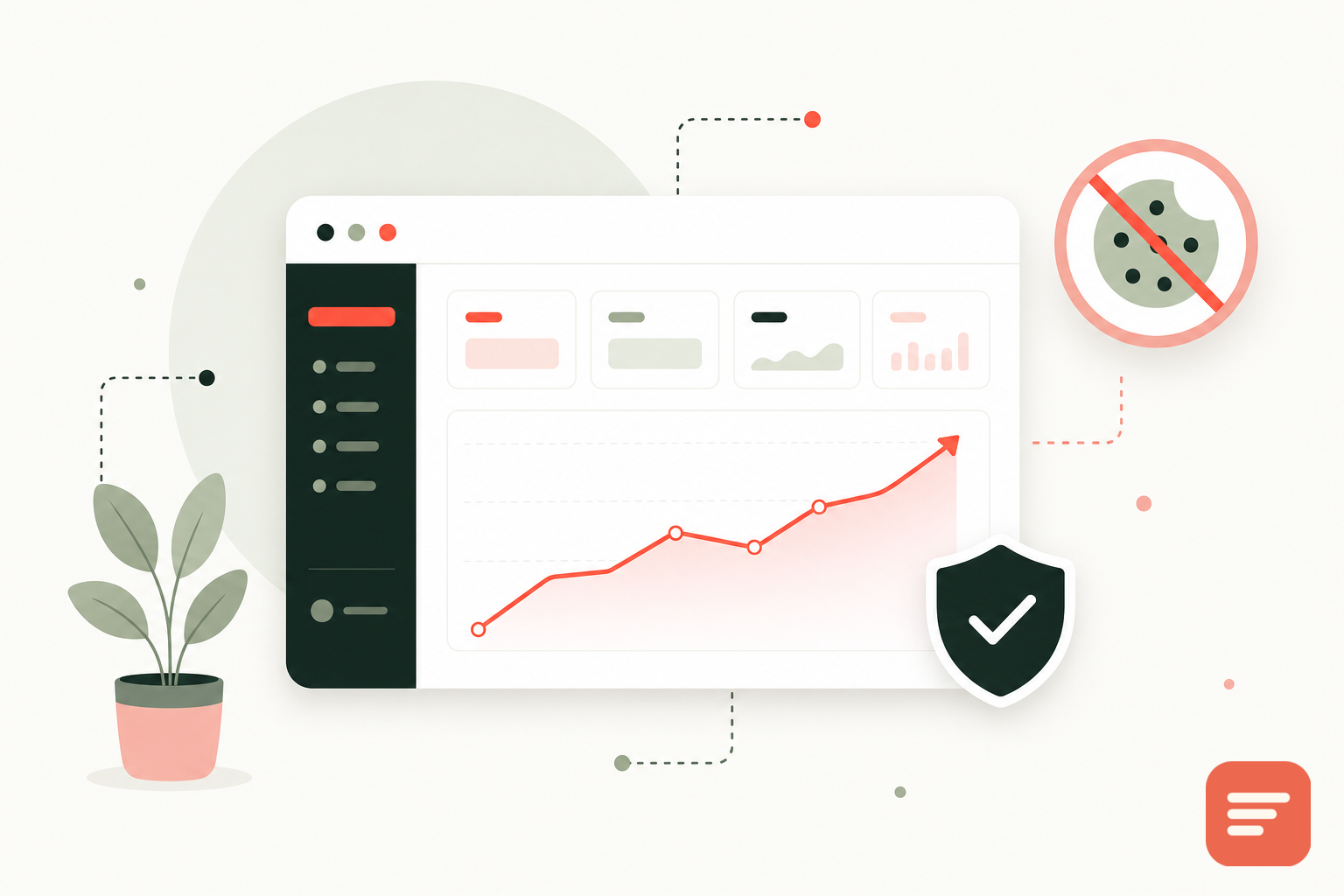
That said, for the question most people actually care about — how many real humans visited my site — a well-built privacy-first tool is often closer, because it captures the ad-blocker and consent-rejecting visitors GA can't see, and because good bot filtering strips out the traffic that was never human. The smaller number frequently reflects reality better than the bigger one you'd grown attached to.
But "closer to reality" isn't even the most useful property. This is:
Consistency beats precision
You will almost never make a decision based on whether you had exactly 7,400 or 7,600 visitors. You make decisions on direction and comparison: is traffic growing, did that post outperform the last one, is this channel worth the effort?
For those questions, what matters is that your tool counts the same way every single day. A tool that's consistently a bit conservative is infinitely more useful than one that's "accurate" on Monday and inflated on Thursday. Pick a ruler and use it every day — the trend line it draws is the thing you actually act on.
So when your new dashboard shows a smaller number than Google did, don't flinch. Ask the better question: is this count honest, consistent, and free of bots? If yes, you've traded a flattering number for a trustworthy one, and that's an upgrade.
That trade is exactly what Gabden Analytics is built around — cookieless counting, no IP storage, and bot filtering that aims for the human number rather than the impressive one. Run it beside your current setup for a week, and instead of asking why the numbers differ, you'll start asking why you ever trusted the old ones.
Gabden Analytics leans toward the honest, lower number: real people, not inflated sessions. To dig in, see how visitors are counted without cookies and how ad blockers shrink your analytics. Try it free in one tag.
Join the discussion