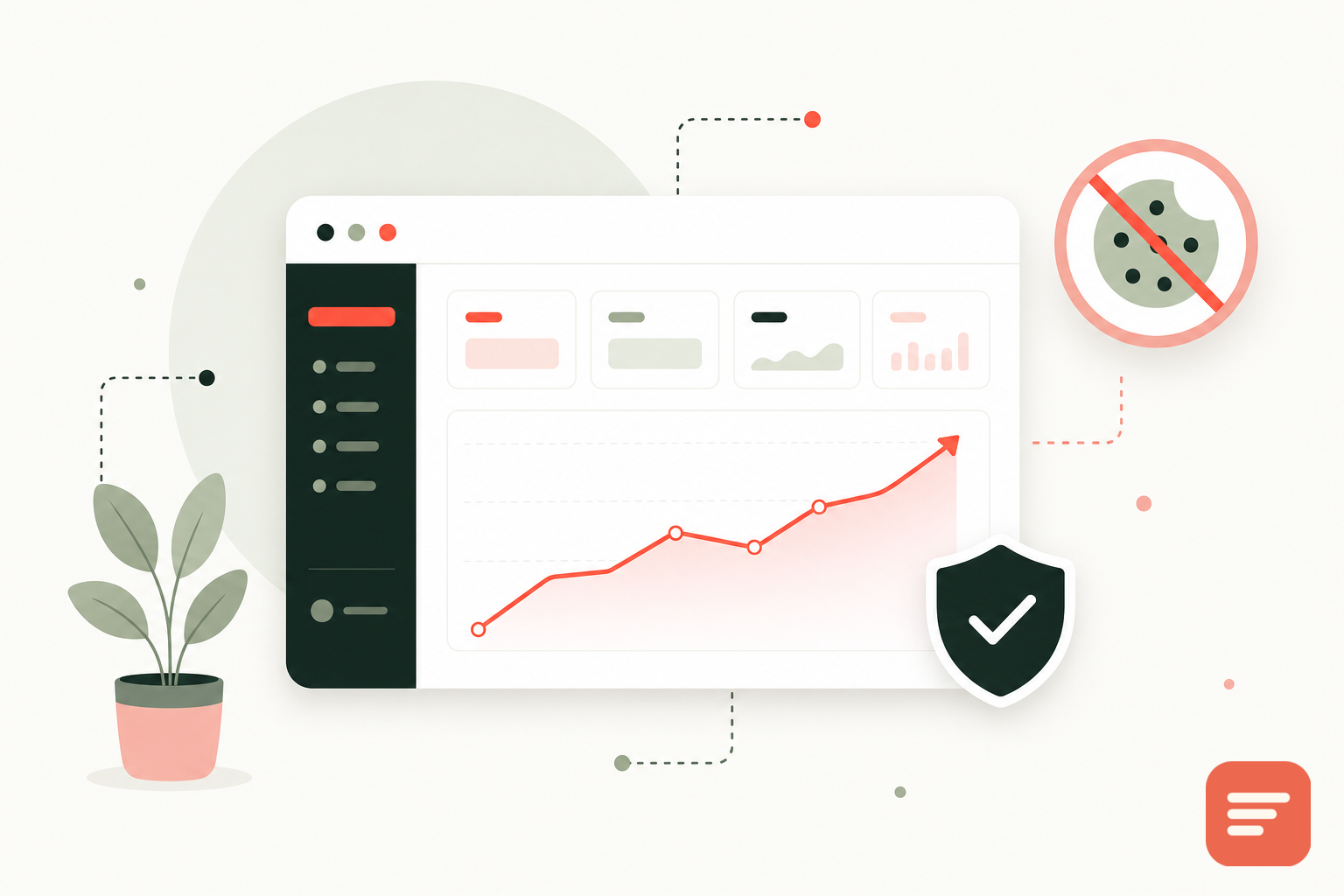
Open your Google Analytics dashboard on a Monday morning and one number quietly lies to you: your visitor count. Not because the tool is broken, but because a big slice of your audience never made it into the report. They declined the cookie banner. They run an ad blocker. Their browser throttled third-party scripts before the pageview ever fired. You are looking at the people who agreed to be counted, and treating them as if they were everyone.
Privacy-first analytics starts from a different assumption. Instead of asking permission to follow each person around and then losing everyone who says no, it measures what happened on your site without building a profile of who did it. That single design choice changes almost everything downstream, and it is why "privacy-first" is not a softer, watered-down version of the analytics you already know. In several important ways, it is a more honest one.
What "privacy-first" actually means
The phrase gets slapped on a lot of products, so it helps to be concrete. When analytics is genuinely privacy-first, a few things are true by design rather than by configuration:
- No cross-site tracking. The tool measures activity on your site and stops there. It does not stitch a visitor's behavior together across the other sites they visit.
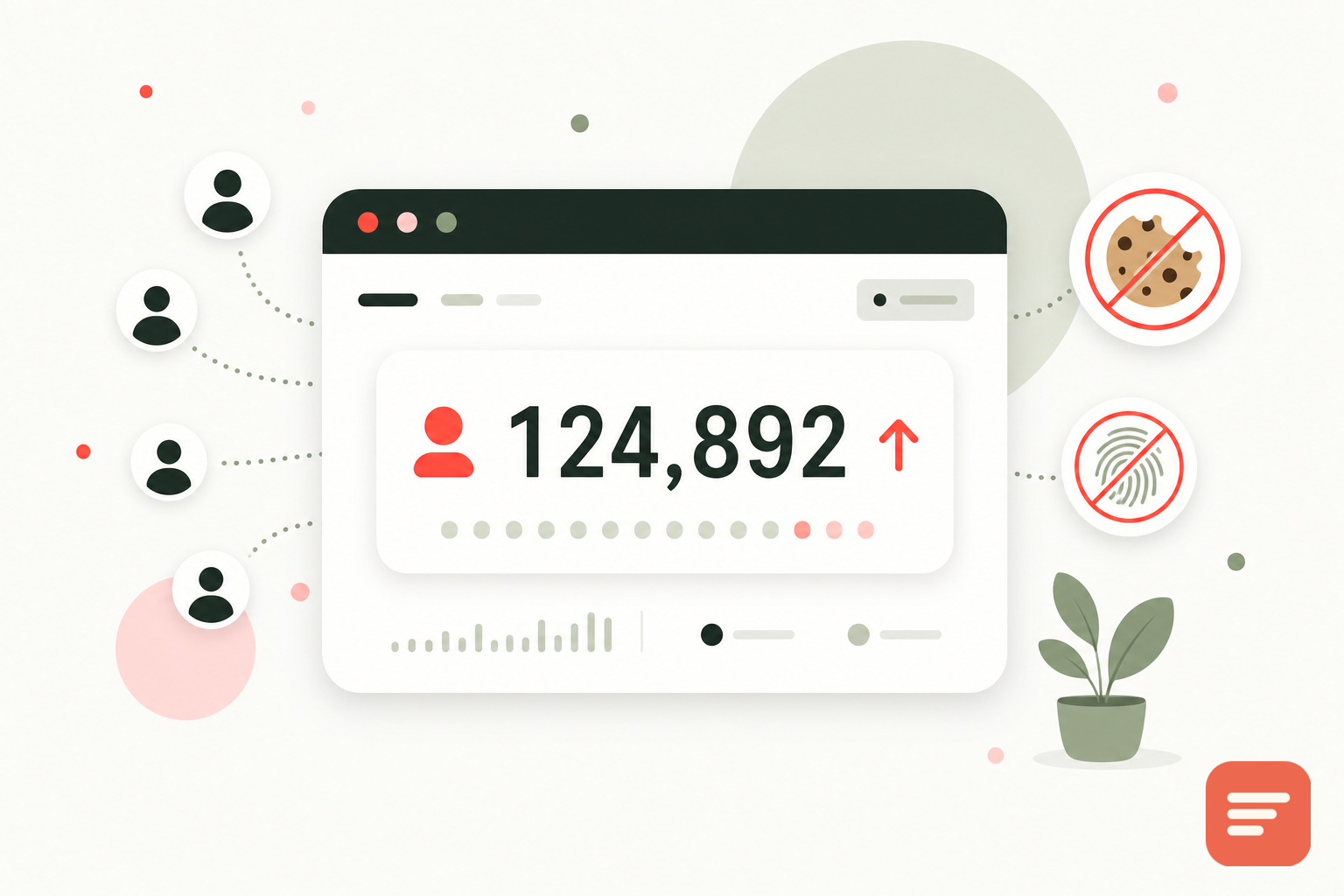
- No persistent identifier for individuals. There is no cookie or stored ID that says "this is the same person who came back on Thursday." Data is aggregated, not tied to a durable profile.
- No raw IP storage. The IP address might be used momentarily to derive a rough country or to generate a rotating, one-way hash, then it is discarded rather than logged.
- Data minimization as the default. The system collects the handful of signals it genuinely needs and deliberately avoids the rest.
Contrast that with the conventional model. Traditional analytics was built to recognize individuals over time and, historically, across the wider web. That is enormously powerful for advertising, and it is exactly the capability that regulators, browser vendors, and a growing number of visitors have decided they are done with.
Why it differs from Google Analytics in practice
The philosophical difference shows up in your day-to-day work in ways that are easy to feel.
The consent banner problem disappears
Because privacy-first tools do not set tracking cookies or build personal profiles, in many jurisdictions they do not trigger the same consent requirements. That means no banner standing between your visitor and your content, or at least a far lighter-touch one. Every marketer knows the ugly truth about consent banners: a meaningful share of people click "reject" or ignore them entirely. Each of those clicks is a hole in your data. Remove the banner and you remove the hole.
Reports get simpler, on purpose
Modern conventional analytics has drifted toward an event-and-parameter model that is flexible but genuinely hard to reason about. Privacy-first tools tend to lean back toward the questions most site owners actually ask: which pages are people reading, where did they come from, what are they doing on mobile versus desktop, which posts are quietly carrying the whole site. Less time configuring, more time deciding.
The best analytics setup is the one you actually look at. A clean dashboard you check every week beats a powerful one you open twice a year.
You stop being the product
This one is less about features and more about incentives. When your analytics vendor's business is advertising, your visitors' behavior is raw material for someone else's ad network. When the vendor's business is simply selling you good analytics, your data has one job: informing you. That alignment matters, and increasingly your visitors care about it too.
The part nobody expects: it can be more accurate
Here is the claim that makes people pause. How can collecting less data give you a better picture? A few reasons, and they compound.
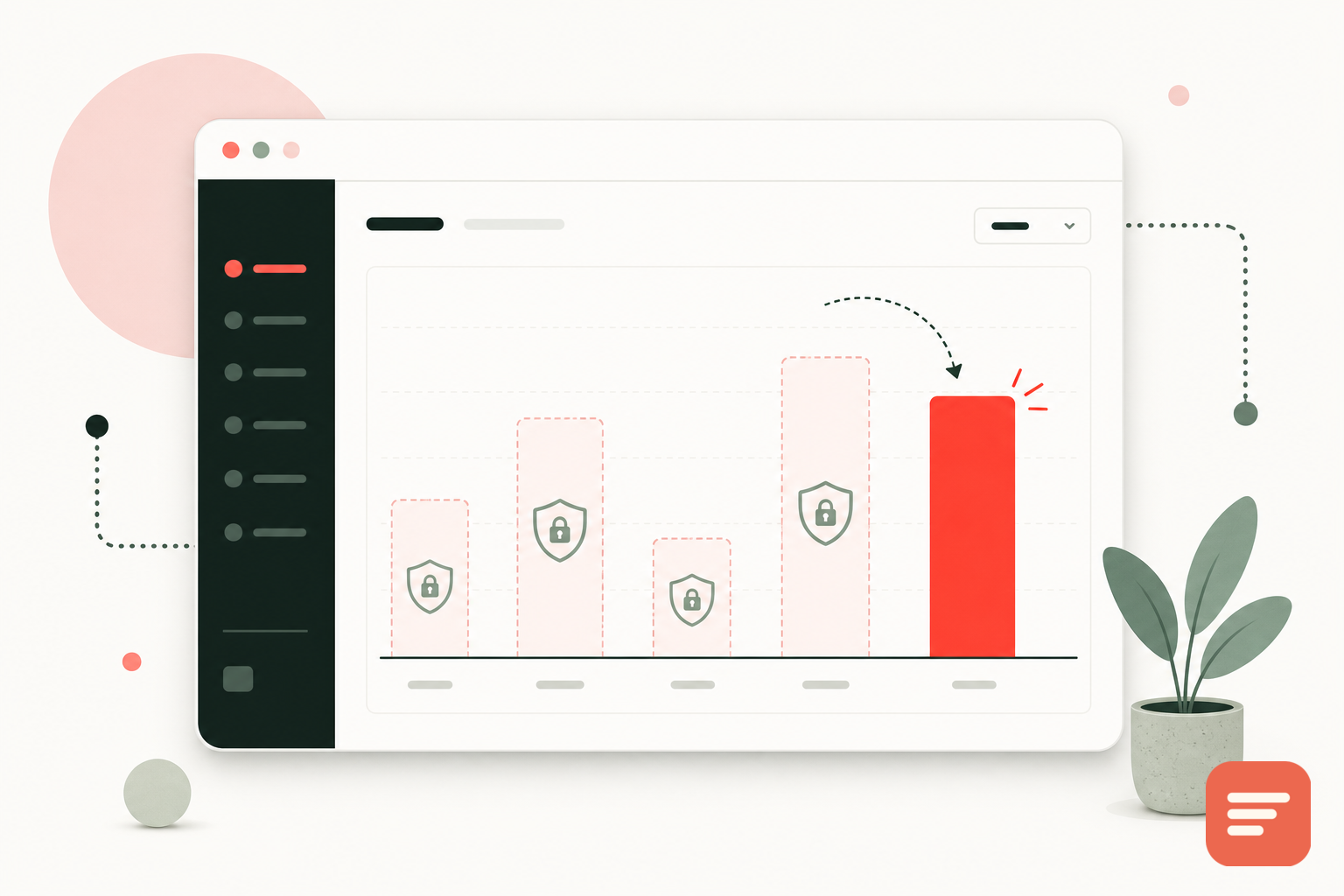
You lose fewer people to consent. This is the big one. If a large portion of your audience declines cookies, a cookie-based tool simply cannot see them. Your traffic looks smaller than it is, and worse, it looks smaller unevenly. Privacy-conscious audiences, certain regions, particular browsers, all get systematically underrepresented. Measure without the banner and those visitors reappear.
You dodge ad blockers more often. Popular tracking scripts are on nearly every blocklist maintained by the browser-extension community. Lightweight, privacy-respecting analytics is far less likely to be on those lists, partly because it is not doing the thing the lists exist to stop. Fewer blocked scripts means fewer missing sessions.
The numbers are less skewed by bots and self-selection. When your dataset is not shaped by "who consented and who runs which extension," the sample you are left with is a truer cross-section of the humans reading your site.
None of this makes any analytics tool perfectly precise. All web measurement is an estimate. But an estimate built from most of your audience beats a precise-looking count built from the compliant half of it. A slightly fuzzy number that includes everyone is more useful for a real decision than a confident number that quietly excludes the people who care most about their privacy, who are often exactly the audience you most want to understand.
What you give up, honestly
Being fair about the trade-offs is part of doing this well. Privacy-first analytics is not trying to be a surveillance tool with the edges sanded off, so it will not do surveillance-tool things.
- No individual user journeys. You will not replay a single named person's clickstream across three weeks. You get aggregate patterns instead.
- Weaker cross-session stitching. Recognizing the same visitor returning over many days is intentionally limited. You trade that precision for not maintaining a persistent profile.
- Fewer hooks into ad platforms. If your world revolves around remarketing audiences and pixel-based attribution, a privacy-first tool is not built to feed that machine.
For a huge number of sites, blogs, docs, product marketing pages, communities, small shops, none of that is a real loss. You were never going to hand-inspect one visitor's journey anyway. You wanted to know what is working and what is not, and that is precisely the question aggregate, privacy-respecting data answers well.
How to think about the switch
If you are weighing a move, do not frame it as "how much power am I sacrificing for compliance." Frame it as "what do I actually need to decide, and what is the cleanest way to see it." Write down the five questions you ask of your analytics in a normal month. Traffic trend, top content, main referrers, mobile share, which campaigns landed. If a privacy-first tool answers those clearly and shows you more of your real audience while doing it, the "power" you would be giving up was mostly power you were not using.
This is the bet Gabden Analytics makes: cookieless by default, no IP storage, GDPR-friendly out of the box, with a free tier and thirty days of history so you can see whether the numbers feel truer than what you have now. Plus unlocks longer retention and a Google Analytics import when you are ready to bring your history along.
Privacy-first analytics is not about measuring less because you are afraid of the rules. It is about measuring honestly, respecting the people on the other end of the screen, and ending up with data you can actually trust. If your current dashboard makes you squint and wonder who it forgot to count, that is a good sign it is time to look at analytics built the other way around.
That is the whole idea behind Gabden Analytics. If you are weighing the legal side, analytics can be GDPR-friendly without a consent popup, and counting visitors without cookies covers the mechanics. Start free with one script tag.
Join the discussion