
Moderation carries real power. You decide which comments appear and which disappear, and readers rarely see the ones you removed. Used carelessly, that power turns a discussion into an echo of your own opinions. Used well, it keeps a space civil while letting genuine disagreement stand. Ethical moderation is about drawing that line honestly and applying it the same way to everyone.
The core tension
Every moderator sits between two failures. Moderate too little and the thread fills with spam, abuse, and bad-faith noise that drives thoughtful people away. Moderate too much and you remove legitimate criticism, flatten disagreement, and quietly train readers that only agreement is welcome. Ethical moderation is not avoiding both; it is choosing the second failure over the first as rarely as possible, and being honest when you are close to the line.
The test is not whether you can remove a comment, but whether you would remove it if it agreed with you. If the answer changes with the opinion, you are moderating your ego, not your community.
Principles that hold up
- Separate tone from content. Remove abuse and personal attacks. Do not remove disagreement just because it stings.
- Be consistent. Apply the same rules to a supporter and a critic. Inconsistency is what readers notice and resent.
- Be transparent. Publish a comment policy so people know the rules before they post, not after you delete them.
- Prefer the lightest intervention. A held comment you can review beats an outright ban. A reply beats a removal.
- Leave a record. Know what you removed and why, so you can explain a decision if challenged.
A written policy does most of the ethical work up front. It sets expectations, gives you something neutral to point to, and stops moderation from looking like a mood. If you do not have one, the blog comment policy template is a starting point you can adapt.
Rules should be about behaviour, not viewpoint
The safest policies target how people comment, not what they conclude. Ban personal attacks, harassment, slurs, spam, and off-topic derailing. Do not ban a position because you disagree with it. This distinction is what separates moderation from censorship in the eyes of your readers. Someone can be completely wrong and still be commenting in good faith, and good-faith disagreement is the raw material of a discussion worth having.
Match the tools to the principles
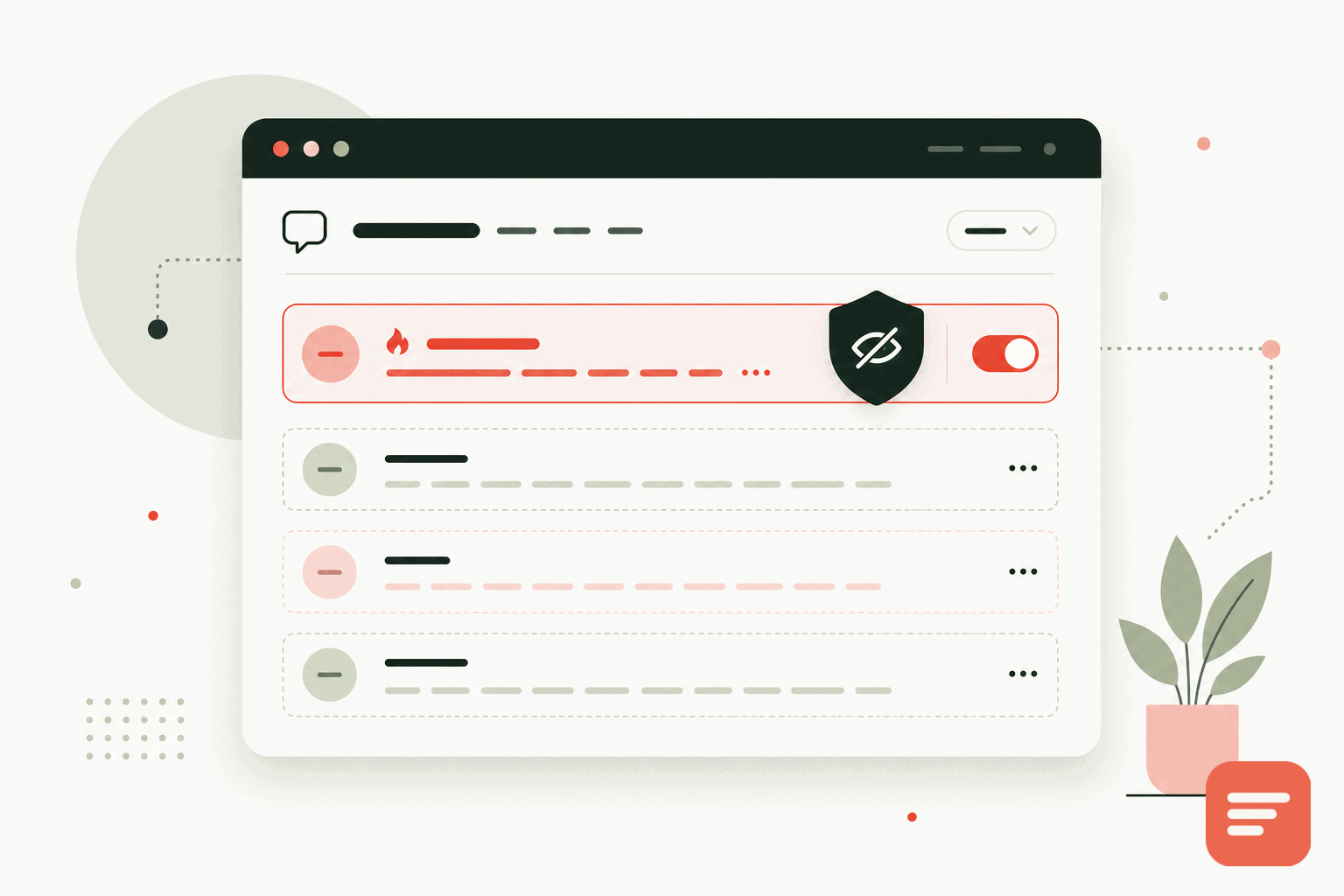
Ethical moderation is easier when your settings let you be proportionate rather than blunt. Gabden gives you a range of modes so you can pick the lightest one that keeps the space healthy:
- Pre-moderate everything when a topic is heated and you want to review before anything is public.
- Auto-approve returning verified people, so readers who have commented in good faith before are trusted, while new or anonymous comments get a look.
- Moderate only anonymous users, which targets the highest-risk source without holding up known readers.
- Auto-approve when your community is small and trusted enough not to need a gate.
A blocked-word filter and a spam and pending queue let you catch clearly abusive or spammy comments automatically while holding borderline cases for a human decision rather than an automatic deletion. That preference for review over reflexive removal is itself an ethical choice.
Automation with a human in the loop
Filters and heuristics are useful for triage, but they should not be the final word on a genuine comment. A blocked word can appear in a perfectly reasonable sentence, and a first-time commenter is not automatically a troll. Use automation to sort and to hold, and use human judgment to decide the cases that are actually about a person's voice. The related post on AI-assisted comment moderation covers where automated scoring helps and where it does not.
Be transparent with the people involved
When you do remove something borderline, consider telling the person why, especially a regular. A short note pointing to the policy line they crossed turns a silent deletion into a fair process. People accept rules they understand far more readily than rules that seem to strike from nowhere. Team roles with per-module permissions help here too: more than one person can moderate, which reduces the chance that a single bad mood sets the standard for the whole community.
The short version
Publish your rules, target behaviour rather than opinion, apply the rules the same way to everyone, prefer holding over deleting, and keep a human in the loop for judgment calls. Do that and moderation protects the discussion without owning it. To set up modes that let you moderate proportionately, register a free site and start with the lightest mode your audience allows.


Join the discussion