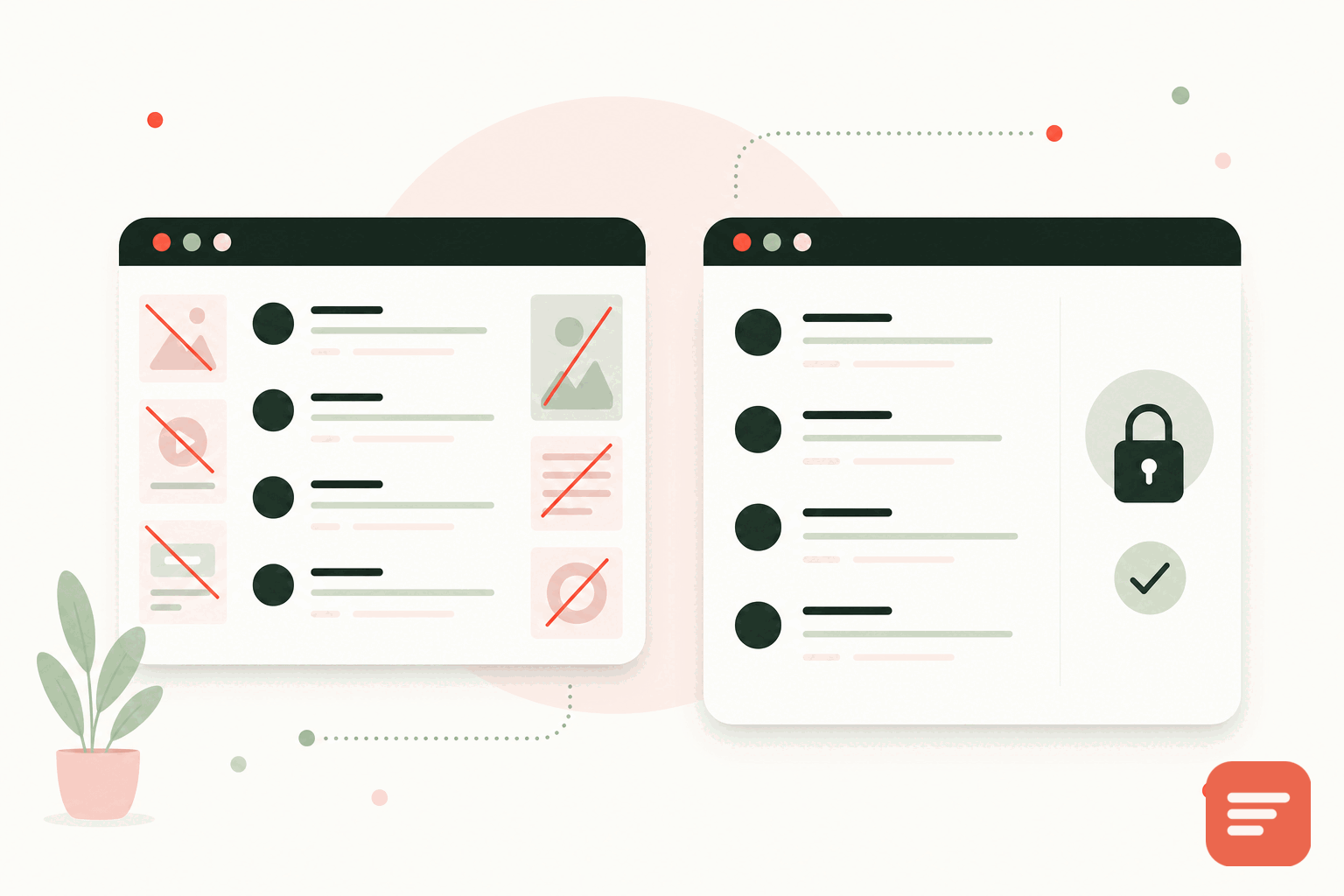
Disqus is the comment system most people know, and for a long time it was the default. The catch is how the free version pays for itself: it shows ads in and around your comment section and loads tracking scripts that profile your readers. If you added Disqus for discussion and ended up hosting an ad network, this is the trade-off you probably did not sign up for.
This is a fair comparison. Disqus is capable and widely supported. But if you want comments without ads and without tracking, there is a cleaner option, and this post explains what changes when you switch.
What ad-supported comments cost you
On the free Disqus plan, the cost is paid by your readers and your page:
- Ads appear in your comment area, competing with your own content and sometimes promoting things you would not endorse.
- Tracking scripts follow readers and feed advertising profiles, which is data collection happening on your site under your name.
- The widget is heavy. The ad and tracking payload adds weight and requests that slow your pages.
- Under privacy rules, the tracking cookies create a consent burden that lands on you.
If a comment tool is free because it shows ads, your readers' attention and data are the price. That price is charged on your pages, not the vendor's.
What an ad-free alternative looks like
Gabden is built to host discussion and nothing else. There are no ads anywhere in the widget. There are no tracking cookies, no fingerprinting, and no cross-site tracking. Analytics are anonymous and aggregate, so you can see engagement without profiling individuals. Your readers get a comment box, not an ad unit.
Removing the ad and tracking machinery also makes the widget small. The embed is about 10KB and loads asynchronously, so pages that Disqus slowed down get their speed back. Light and private are the same decision here: there is no ad payload to load because there are no ads.
Feature comparison
You do not give up the features that made Disqus useful:
- Threaded replies and reactions (a like and a heart).
- Reader choice: comment anonymously, as a guest with name and email, or sign in with Google or GitHub for a hosted profile.
- Moderation modes from pre-moderating everything to auto-approving returning verified people, plus a blocked-word filter and a pending queue.
- Light and dark themes with presets, team roles with per-module permissions, and per-page rules to turn comments off on chosen URLs.
The main thing that is gone is the advertising and the tracking that came with it.
Moving your existing comments
Switching does not mean abandoning your history. Gabden can import existing comments from Disqus, mapped to each page's URL, so your threads land back on the pages they came from. Because each thread is keyed to the page's canonical URL, keeping your URLs stable through the switch keeps the SEO value of those comments intact. The related post on migrating comments without hurting SEO covers how to do that cleanly.
Pricing without the ad trade
Gabden is free forever up to 100,000 widget views per month per website, which shows a small "Powered by Gabden" mark and, importantly, shows no ads. Plus removes the mark for 5 dollars per month per website, billed per site, cancel anytime. Either way, you are not paying with your readers' data. See pricing for the details.
Who should switch
Switch if you want comments without ads in your discussion area, without tracking your readers, and without the page-speed cost of a heavy widget. Stay on Disqus if the ad-supported model genuinely does not bother you. For a broader look at the privacy concerns specifically, see Disqus privacy issues and why publishers switch. To try the alternative, register a free site and run the Disqus import against your pages.

Join the discussion