
Most blogs treat every visit as a one-way transaction. Someone arrives from search, reads a post, and leaves. A community is what happens when some of those readers start coming back, recognize each other, and treat your site as a place rather than a page. That shift does not happen by accident. It comes from small, repeatable choices about how you invite and reward participation.
Start with a place to talk
You cannot build a community without a room for it. For a blog, that room is a comment thread attached to each post. When a discussion is keyed to the page's canonical URL, the conversation stays with the content it belongs to, which means a reader who returns to an article finds the same thread they left. That continuity is the foundation. People will not invest in a discussion that resets or disappears.
Lower the cost of the first comment. If someone has to create an account, verify an email, and confirm a password before they can say one sentence, most will not bother. Let people post anonymously, as a guest with just a name and email, or by signing in with Google or GitHub if they prefer a persistent identity. The reader picks the level of commitment, not you.
Give people a reason to return
A community forms around expectation. Readers come back when they believe something will be waiting for them: a reply, a new post on a topic they care about, or a question you asked that they want to answer.
- End posts with a genuine question, not a generic "what do you think." Ask something only your readers can answer from experience.
- Reply to early comments quickly. The first few responses set the tone and signal that someone is listening.
- Publish on a rhythm people can predict. Regular cadence trains the return visit.
Recognize your regulars
Every community has a small core that carries most of the conversation. Notice them. Reply to them by name, reference something they said in a past thread, and let their good comments stand as examples of the tone you want. Hosted profiles help here, because a returning reader builds a small track record instead of appearing as a stranger every time.
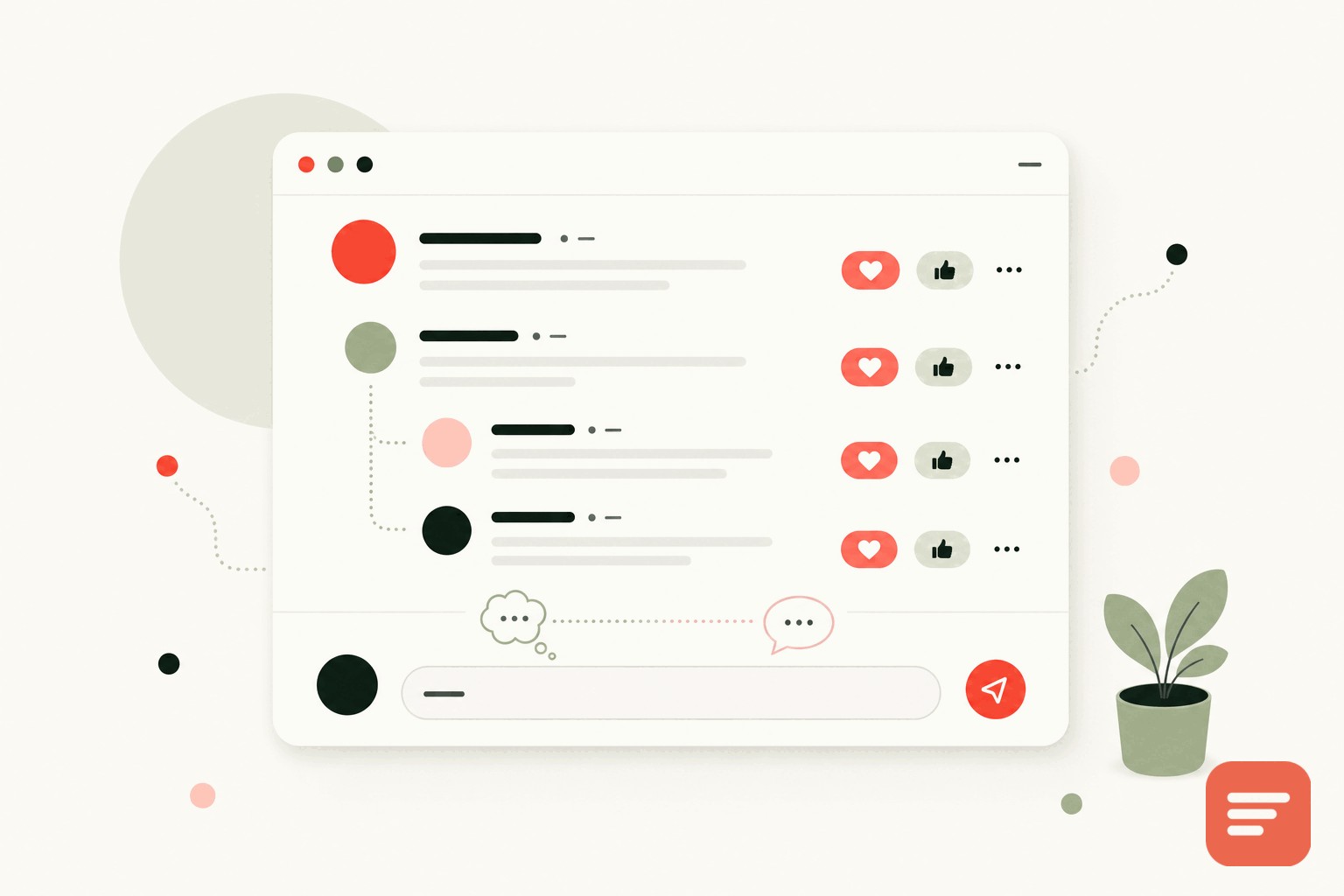
Reactions do quiet work too. A like or a heart lets people acknowledge a comment without writing a full reply, which keeps momentum going in threads that would otherwise stall. Threaded replies keep those exchanges legible, so a back-and-forth between two readers does not bury everyone else's contributions.
Keep the space healthy
Communities die from two directions: neglect and toxicity. Neglect you fix by showing up. Toxicity you manage with moderation that fits your tolerance and your time.
You do not have to read every comment before it appears. Pick a mode that matches your risk: pre-moderate everything when a topic is heated, auto-approve returning verified people so your regulars are never held up, or moderate only anonymous users while trusted names post freely. A blocked-word filter and a pending queue catch the obvious problems so you spend your attention on the comments that need judgment.
Let the community shape the blog
Once discussion is flowing, it becomes a source. Recurring questions in the comments are future posts. Disagreements point to topics you have not covered clearly. A reader who explains something well in a thread might become a guest contributor. The blog stops being a monologue and starts being a conversation you happen to host.
None of this requires a forum or a separate platform. It requires a thread on every post, a low barrier to the first comment, and the discipline to reply. If you want the discussion to live on your own pages rather than on someone else's network, a lightweight embed keeps it there. You can set up a thread on your blog in a few minutes, and if you want the fuller picture of how the discussion widget works, the conversations overview covers it.
Start with one post, one honest question, and a commitment to answer whoever replies first. Communities grow from that, one returning reader at a time.


Join the discussion