Most readers never comment. The ones who do are acting on motivations that are older than the internet: they want to be seen, to belong, to return a favor, or to correct the record. If you understand what pulls people into a conversation, you can design a comment section that draws out the good version of that impulse and dampens the bad.
Identity: people comment to be someone
A comment is a small act of self-presentation. When someone posts, they are saying "here is what I think, and here is who I am." That is why a consistent identity matters. A reader who can build up a recognizable presence, with a name and a profile that follows them across threads, has a reason to protect their reputation and post thoughtfully. Pure anonymity has its place for sensitive topics, but a persistent identity tends to raise the quality of what people are willing to attach their name to.
This is also why letting people choose how they show up helps. Some will comment as a guest with a name, some will sign in with Google or GitHub, some want to stay anonymous. Giving readers that choice respects the different reasons they have for speaking up.
Belonging: people comment to join something
Humans are drawn to places where they recognize other people. A thread with a handful of familiar names feels like a room worth entering. An empty comment box feels like talking to yourself. This is the cold-start problem, and it is mostly psychological. The first few comments do disproportionate work because they signal that the space is alive.
- Seed early threads yourself with a genuine question, so the box is not empty.
- Reply to early commenters by name, which tells everyone watching that participation is noticed.
- Welcome returning readers rather than treating every visit as a first contact.
Reciprocity: people comment because you did
Reciprocity is one of the strongest social forces. When an author replies to a comment, the commenter feels acknowledged and is far more likely to come back. When you answer a question in public, the next reader with the same question sees that this is a place where questions get answered. A comment section is a two-way relationship, and the author sets the tone by showing up.
The fastest way to get more comments is to reply to the ones you already have. Attention is the currency, and you control the supply.
The dark side: outrage and pile-ons
The same motivations have a shadow. Identity can curdle into performance for an audience, where being provocative earns more attention than being right. Belonging can turn into an in-group ganging up on an outsider. Reciprocity can become a feud. Design choices either feed these dynamics or slow them down.
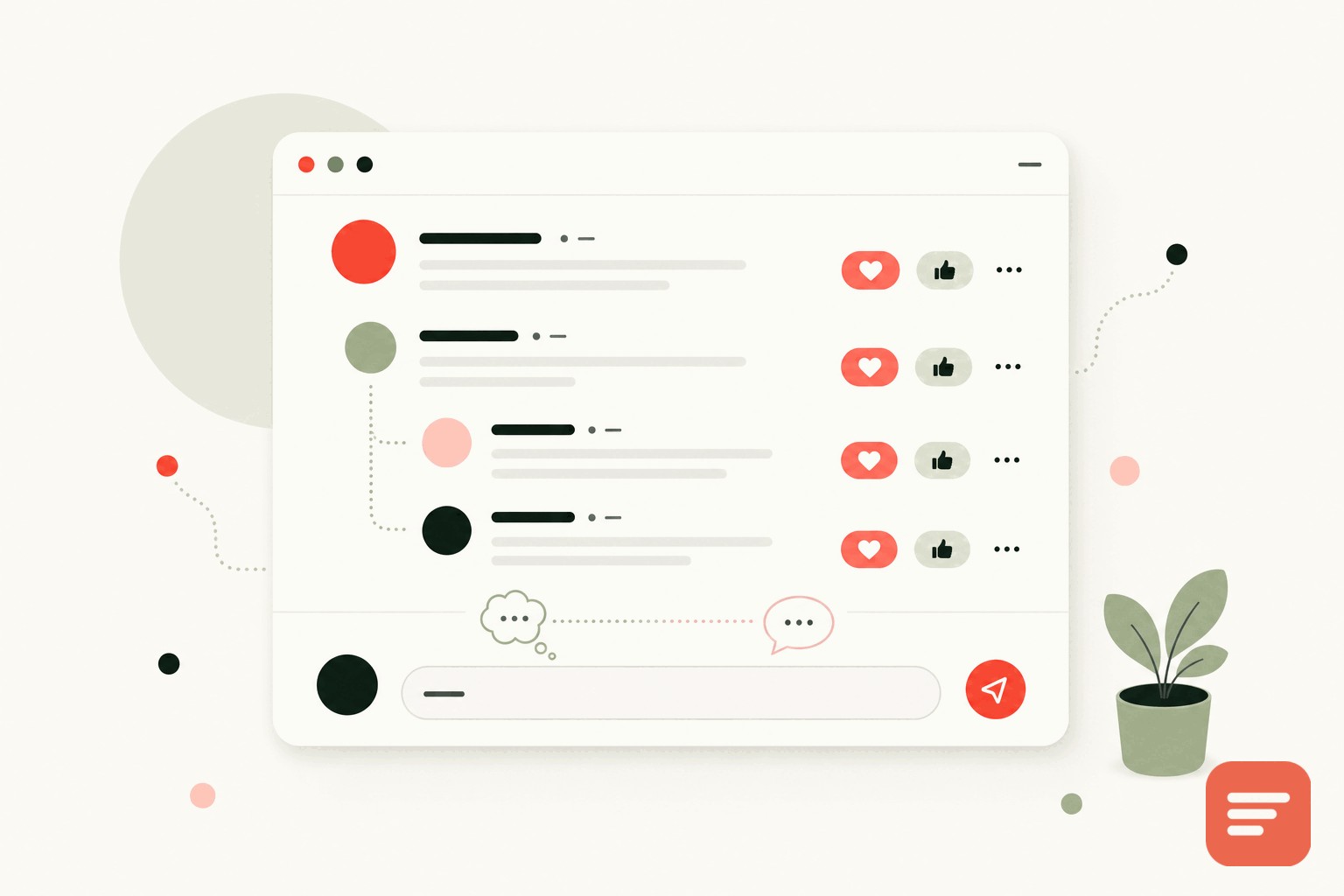
Reactions such as like and heart give readers a low-stakes way to signal agreement, which reduces the number of "me too" comments that can otherwise turn into pile-ons. Threaded replies keep disagreements contained to a branch instead of derailing the whole thread. And clear moderation, applied consistently, tells everyone the rules are real.
Designing for the healthy version
The takeaway is that participation is shaped, not just permitted. A few practical moves:
- Let people build a stable identity so reputation has weight, while still allowing anonymous posts where they make sense.
- Reduce friction to the first comment, because momentum compounds.
- Reply early and by name to trigger reciprocity.
- Moderate visibly and consistently so the space feels safe to join.
Gabden's design reflects this. Readers pick how they show up, hosted profiles give regulars a persistent identity, reactions and threaded replies channel participation, and moderation modes let you set the tone from day one. If you want to put these ideas into practice, our blueprint for building blog community is a step-by-step companion, and you can start a free site to try it on your own pages.



Join the discussion