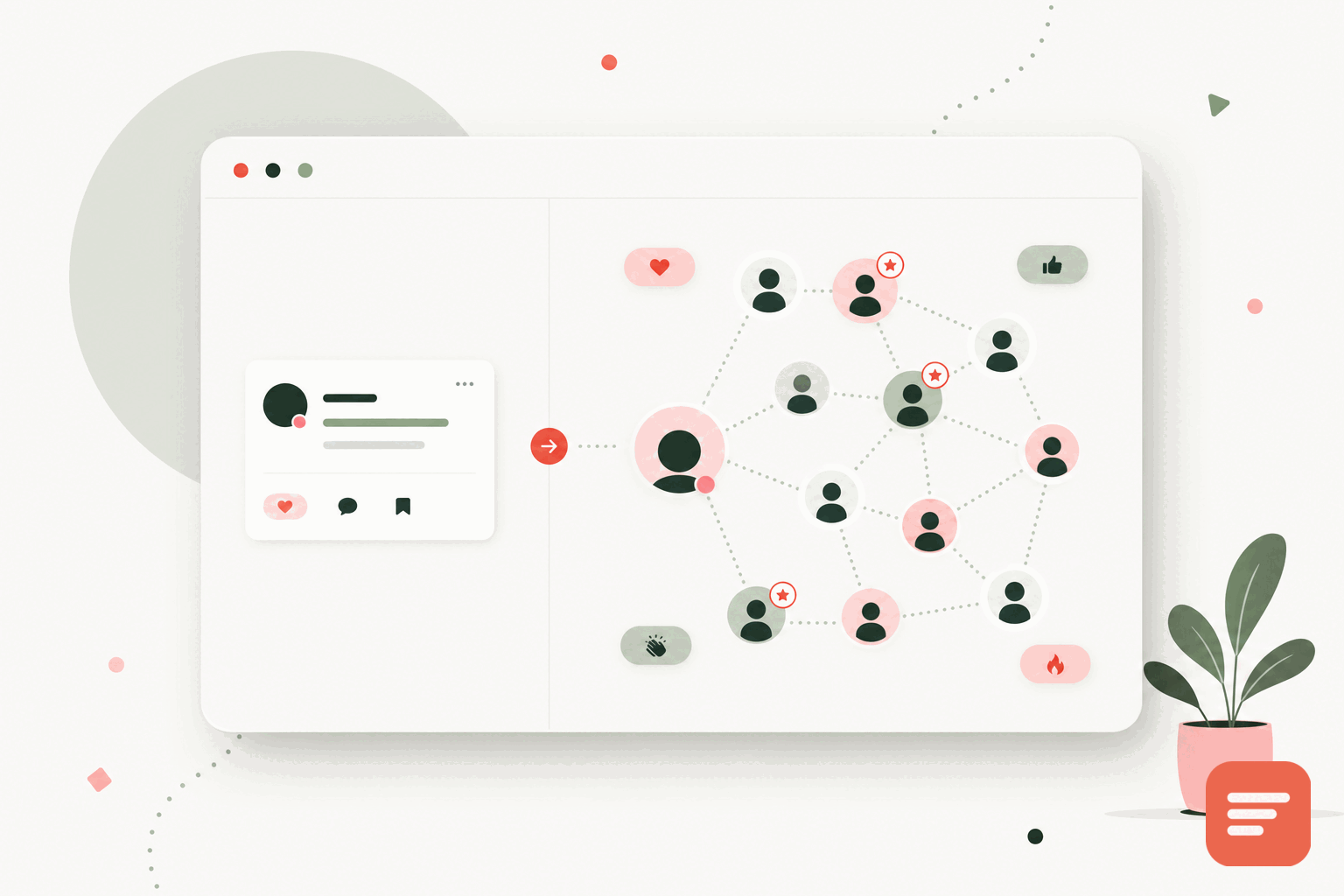
Community is a habit, not a feature
You do not build a blog community by turning on comments and waiting. A community is a set of people who have formed a habit of returning to talk, and habits take deliberate design. The good news is that the work is concrete and repeatable. You do not need a huge audience to start. You need a few early participants, consistent replies, and a space that feels safe enough to speak in.
Start before you have a crowd
The first comment is the hardest to earn, so lower the barrier. Let readers post as a guest with just a name and email, or sign in with Google or GitHub if they prefer. People who have to create yet another account before they can say "this helped" usually just leave. When someone can react with a like or a heart, or drop one line without friction, you get the first sign of life that pulls others in.
End posts with a real question, not "what do you think?" Ask something a reader can answer from their own experience: which approach did you try, what broke, what would you add. Specific prompts get specific answers, and specific answers invite replies.
Reply like a host, not a broadcaster
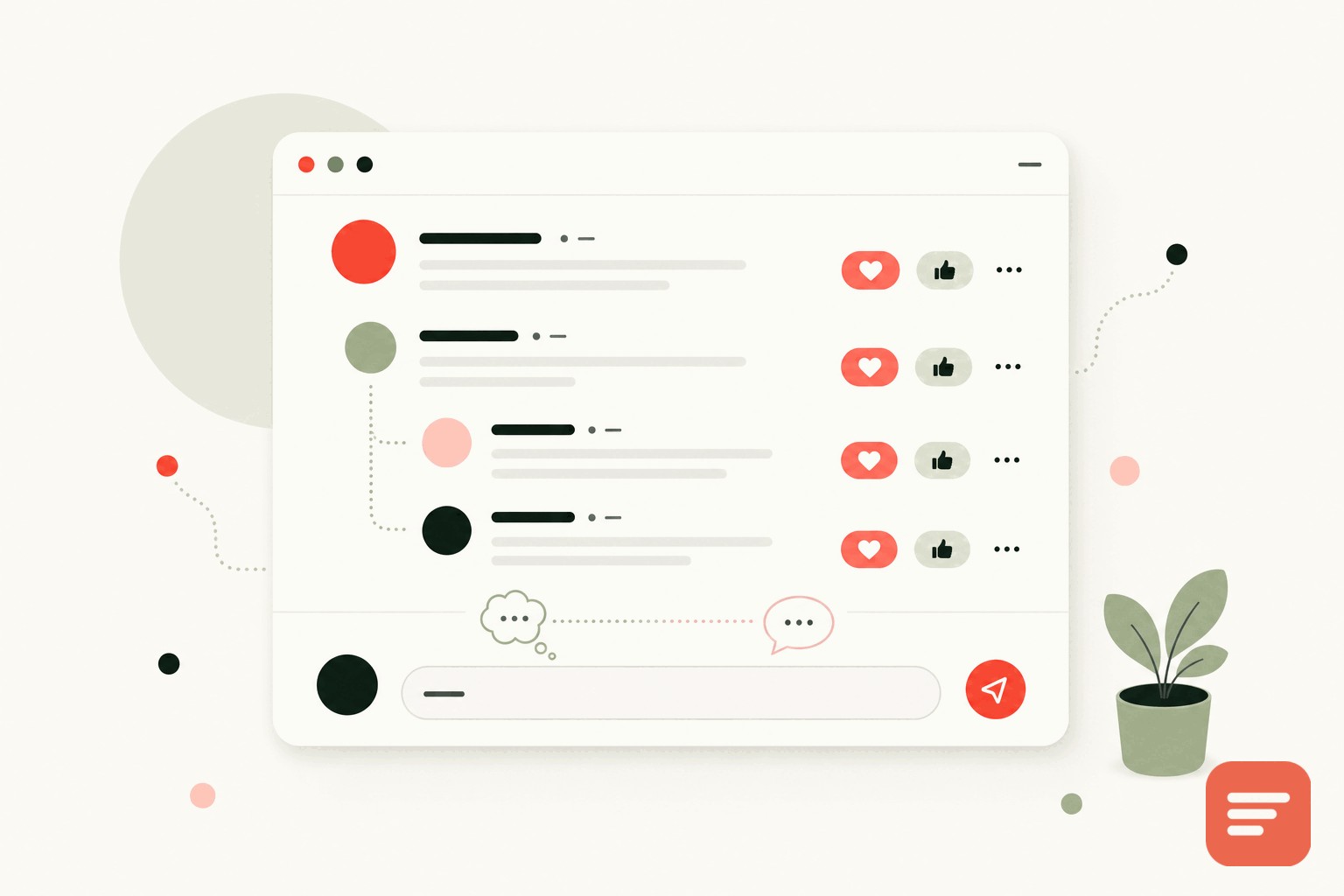
The single biggest lever is showing up in your own threads. When you answer early comments quickly and by name, you signal that this is a conversation, not a suggestion box. Aim to respond to the first few comments on every post within the day. Threaded replies keep those exchanges readable, so a back-and-forth reads as a conversation instead of a pile of disconnected notes.
- Thank the first commenter on a post specifically, referencing what they said.
- Ask a follow-up question so the thread has somewhere to go.
- Pull a good comment up into a future post and credit the person. Recognition brings people back.
Make returning easy and worthwhile
Regulars form when there is a reason to come back and a place that feels like theirs. Hosted profiles let readers build a small identity across your threads, so a familiar name starts to mean something. A per-tenant public community page gives your discussions a home beyond individual posts, a single place people can browse and feel part of.
Keep the space safe
Communities die from two directions: silence and toxicity. Moderation handles the second. Decide how strict you want to be. You can pre-moderate everything at first, auto-approve returning verified people once you trust them, or moderate only anonymous users. A blocked-word filter and a spam queue keep the worst out without you watching every thread. A visibly safe space is one people are willing to speak in, and willingness to speak is the whole game.
Set the tone out loud
Write a short comment policy and mean it. Two or three plain sentences about what belongs and what does not will shape behavior more than any filter. When you remove something, you are enforcing a standard you already stated, which reads as fair rather than arbitrary.
Give it time and a rhythm
Community compounds slowly, then noticeably. A thread with three thoughtful comments makes the next reader more likely to add a fourth, because an empty box feels risky and a live one feels welcoming. Publish on a steady rhythm so regulars know when to check back. Reference past discussions in new posts so the community has a memory. Over a few months, the same names start appearing, and they begin answering each other, which is the point at which it stops being your comment section and starts being a community.
The mechanics are simple to set up. You paste one script tag, keyed to each page's canonical URL, and the discussion lives with the content. If you want the operational side of keeping threads healthy, our guide on choosing a moderation strategy pairs well with this. When you are ready to put a thread under your posts, you can create an account and start.
Join the discussion