Free is a strong word, and comment systems use it a lot. Some of them are genuinely free in the way that matters. Others are free the way a highway billboard is free to the driver: someone is paying, and it is not the company giving you the tool. Before you install a no-cost comment system, it helps to know what you are actually handing over.
Ads on your discussion
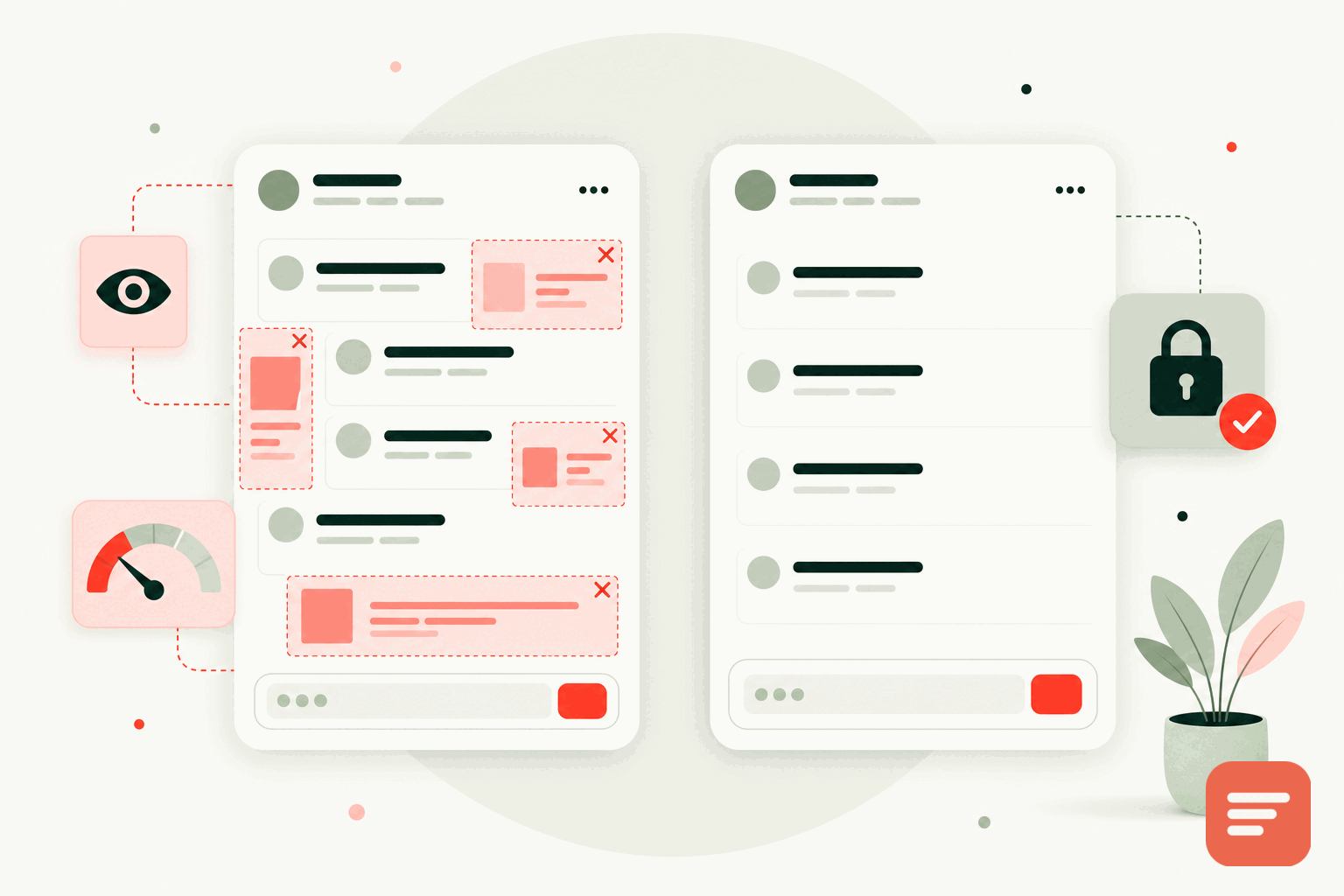
The most common way a free comment tool earns money is by placing ads inside or around the thread. Those ads are not yours, you do not choose them, and the revenue goes to the vendor. Your readers see promoted content next to their own words, and the visual clutter competes with the conversation you were trying to encourage. On a site where you have carefully controlled the design, a comment widget stuffed with third-party ads is jarring.
Tracking and the privacy bill
Ad-supported systems tend to rely on tracking to make those ads worth more. That means cookies, fingerprinting, and cross-site identifiers dropped on your visitors through a widget you embedded. You inherit the privacy exposure even though the data collection benefits someone else. If you operate under GDPR or similar rules, a tracking comment widget expands your consent obligations and your risk without adding anything for your readers.
The privacy-first alternative is simpler by design: no tracking cookies, no fingerprinting, no cross-site tracking, and only anonymous aggregate analytics. When a system does not build reader profiles in the first place, there is nothing to leak and nothing to disclose beyond the basics.
Page weight and speed
Free widgets are often heavy. They load their own scripts, ad code, tracking pixels, and sometimes third-party fonts and frames. All of that arrives on your page and counts against your Core Web Vitals. A slow comment embed can drag down a page that was otherwise fast, and search engines notice page experience.
Weight is a choice the vendor makes, and you live with it. A lean embed of around 10KB behaves very differently from a widget that pulls in an advertising stack. If speed matters to you, ask what a comment tool actually loads before you judge it on price. Our note on how your comment system affects performance and SEO goes deeper on this.
Who owns the conversation
The quieter disadvantage is control. With many free systems, your comments live on the vendor's platform under the vendor's terms. If they change pricing, get acquired, shut down, or decide your content violates a policy, your discussion history is exposed to their decision. Exporting can be awkward or incomplete, and you may find the data is not really yours to take.
- Can you export every comment as JSON or CSV, on demand?
- Are exports mapped to the page URLs they belong to, so a migration is clean?
- If the service disappeared, would your threads survive?
Owning your data means being able to answer yes to those without a support ticket.
When free is fine
Not every free tier is a trap. Some services offer a real free plan and make money from paid upgrades rather than from your readers. The tell is who the customer is. If the free tier funds itself by selling ads or data against your traffic, you are the product. If it funds itself by hoping you will eventually pay for more, your interests and the vendor's are aligned.
Gabden is free up to 100,000 widget views per month per website, with a small "Powered by Gabden" mark and no ads, no tracking, and no selling of reader data. The paid plan removes the mark and lifts the view cap for five dollars per month per website. The point is that free here means a smaller feature set, not a hidden invoice paid by your visitors' privacy. If you want to weigh the tiers directly, the pricing page lays them out.
Free is worth taking when you understand the trade. The disadvantages are only hidden if you do not ask what pays for the tool.

Join the discussion