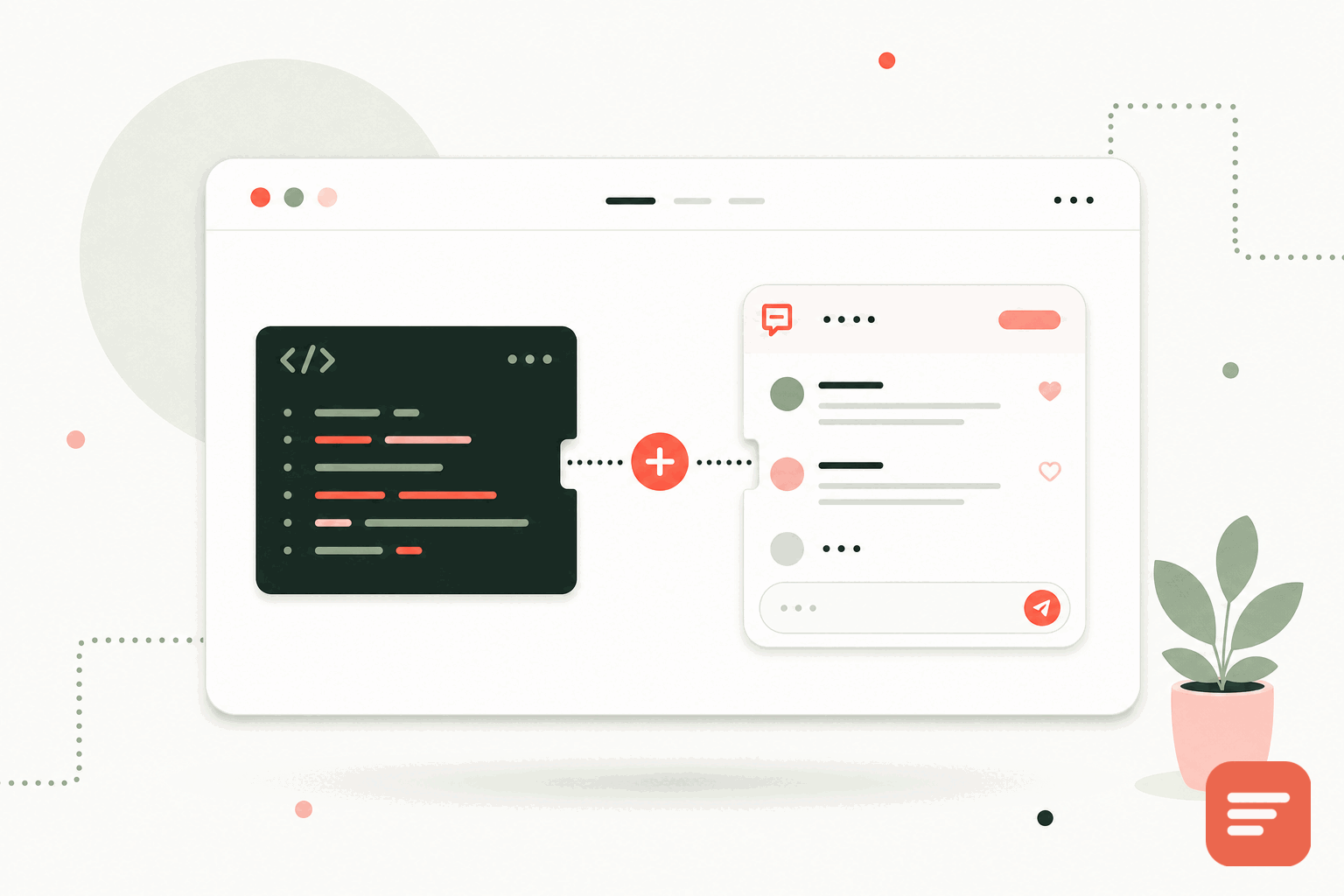
Squarespace and comments
Squarespace used to have native blog comments and has since scaled that feature back, which leaves many sites without a real discussion section. If you want threaded replies, reactions, and moderation you control, an external comment service is the practical route. Squarespace supports custom code blocks, and that is all Gabden needs.
The embed is one script tag, around 10KB, loading asynchronously so it does not hold up the rest of your page. Each thread is keyed to the page's canonical URL, so the discussion belongs to the post and moves with it. There are no tracking cookies and no fingerprinting, which fits the clean, design-led sites people build on Squarespace.
Add a code block to a blog post
The most direct way is a Code Block on the post itself.
- Open a blog post in the Squarespace editor.
- Add a block at the bottom of the content and choose Code.
- Set the block to HTML, turn off the Display Source option, and paste the snippet.
<div id='gabden-conversations'></div>
<script async src='https://YOUR-SITE.gabden.com/conversations.js'
  data-page='canonical'
  data-theme='auto'></script>
Replace YOUR-SITE with the key from your Gabden dashboard, which you copy once. Save and view the post. The thread renders below your content.
Adding it to every post at once
Placing a code block on each post works but is tedious. If your plan includes Code Injection, you can add the embed to the blog post area site-wide instead. Squarespace's per-page Code Injection or the site-wide footer injection lets you insert the same HTML across posts. Because Gabden keys each thread to the page URL, one injected embed still produces a separate discussion on every post. Use whichever fits your Squarespace plan.
Watch the canonical URL
Gabden ties each discussion to the page's canonical URL. Test on your live domain, not on the built-in squarespace.com trial address, because those are different URLs and hold different threads. Once your custom domain is connected, load a post and confirm the thread appears where you placed the block.
What readers get
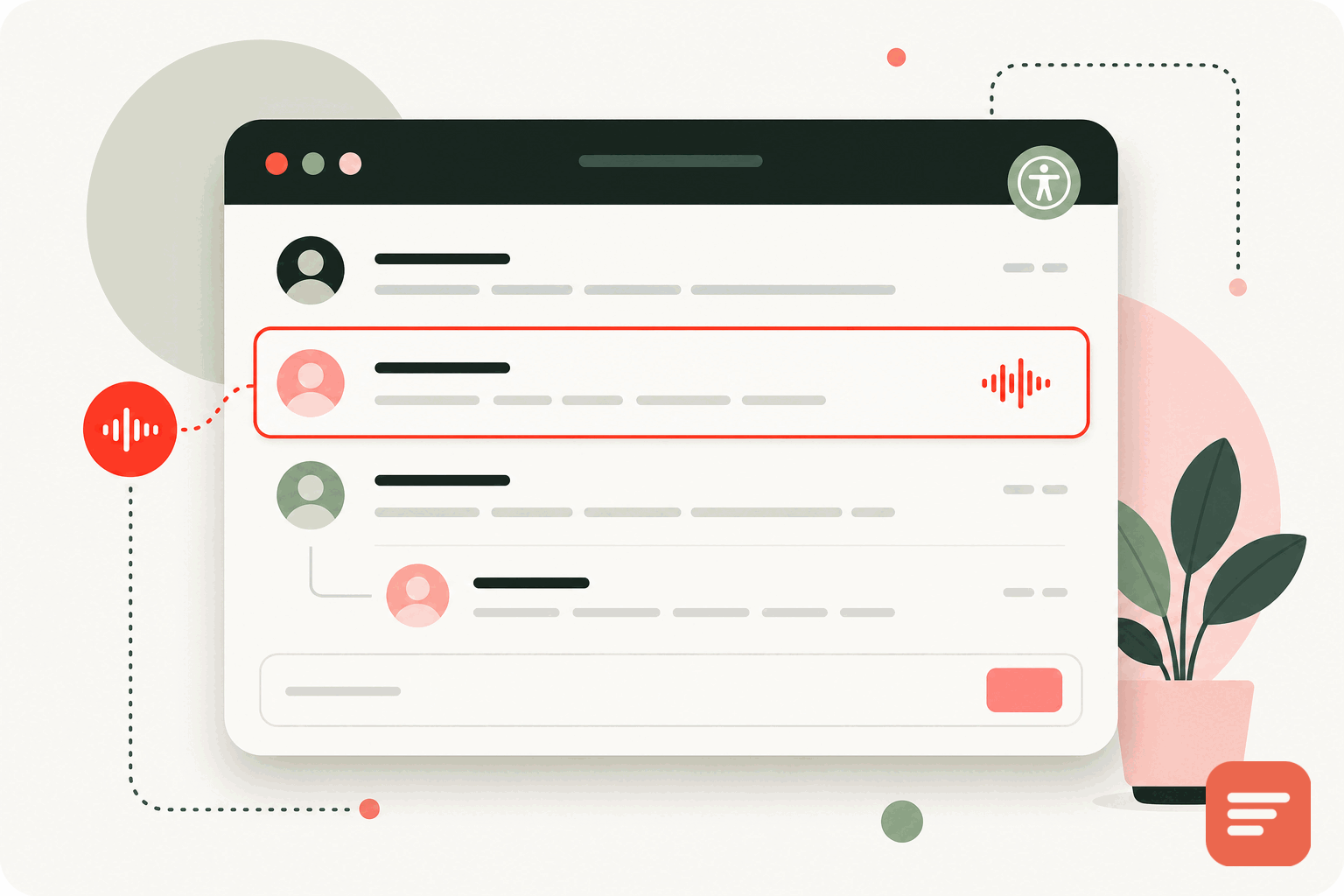
Readers can comment anonymously, leave a name and email as a guest without an account, or sign in with Google or GitHub. Replies are threaded, and readers can react with a like or a heart. None of this asks for a Squarespace login, so a reader can respond in a few seconds.
Moderation and theming
All moderation lives in the Gabden dashboard. Choose to pre-moderate everything, auto-approve, or auto-approve returning verified people while holding anonymous posts for review. A blocked-word filter and a spam queue catch the routine problems, and you can turn comments off on specific URLs when a page should stay quiet.
Gabden has light and dark themes with presets, so you can match the widget to your Squarespace template rather than fighting its styling. Pick the theme that matches your site and the thread reads as part of the page.
Keeping your data
Because the comments live in Gabden, you own them and can export as JSON or CSV whenever you want. That portability matters on a closed platform: if you ever move off Squarespace, your discussions are keyed to page URLs and can follow your content instead of being stranded.
Cost
Gabden is free up to 100,000 widget views per month per website, with a small "Powered by Gabden" mark. Plus is 5 dollars per month per website for unlimited views and the mark removed, billed per website, cancel anytime. Most Squarespace blogs fit comfortably in the free tier.
To get your Gabden subdomain, create an account. If you run a Wix site as well, the same approach is covered in our Wix guide.


Join the discussion